
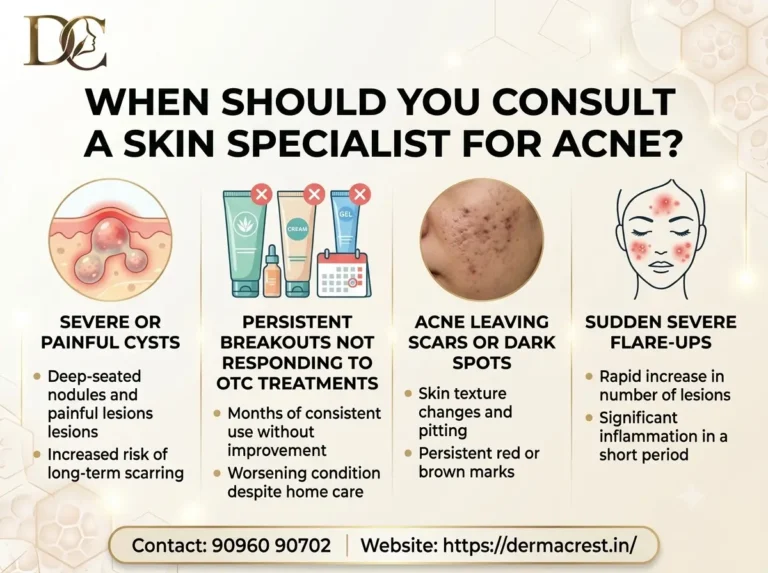
Acne is one of the most common skin concerns across all age groups, and mild cases may improve with a consistent skincare routine within a few weeks. However, acne that keeps returning, becomes more inflamed or leaves dark spots and scars may require professional attention. Persistent or severe acne can be associated with hormonal changes, clogged hair follicles deep beneath the skin or bacterial activity, which general skincare products may not adequately address. Consulting a Skin Specialist for Acne can help identify the underlying causes and determine an appropriate treatment approach. Recognising the signs early may help manage breakouts, reduce the risk of scarring and prevent acne from becoming more persistent. This guide explains when acne needs attention from a skin specialist, the signs to watch for and what professional acne treatment typically involves.
Acne causing permanent scars is one of the most common reasons people delay seeking help, mainly because scarring often develops gradually. Inflamed acne on the cheeks, jawline or back damages the collagen structure of the skin as it heals, and repeated cystic breakouts in the same area increase the likelihood of pitted or raised scarring. The longer inflamed acne is left untreated, the higher the chance it leaves a permanent mark. Reducing inflammation early in the course of treatment is generally associated with a lower risk of scarring.
Acne treatment specialist consultations typically begin with identifying the type and cause of acne before suggesting a treatment plan. Common approaches include:
• Topical prescription treatment: Retinoids, antibiotics or benzoyl peroxide formulations stronger than over-the-counter versions, prescribed based on acne severity.
• Oral medication: Antibiotics, hormonal treatment or isotretinoin for moderate to severe or cystic acne that has not responded to topical treatment.
• In-clinic procedures: Chemical peels, extraction of cysts or comedones and laser-based treatments for active acne or early scarring.
• Hormonal evaluation: Blood tests or referral for hormonal acne linked to conditions such as polycystic ovary syndrome, particularly when breakouts cluster along the jawline.
A skin specialist adjusts this combination based on skin type, acne severity and how the skin responds over the first few weeks of treatment.
Hormonal acne treatment usually combines topical care with options that address hormone-driven oil production, such as specific oral medications prescribed after evaluation. Hormonal acne typically appears along the jawline and chin, tends to flare around monthly cycles and often persists into adulthood even when teenage acne has cleared. A skin specialist can distinguish hormonal acne from other forms through the pattern of breakouts and, where needed, blood work, which allows treatment to target the actual cause rather than only the surface symptoms.
Acne is not limited to the teenage years, and the right treatment approach differs by age group.
• Teenagers: Acne during puberty is commonly driven by rising hormone levels and tends to appear across the forehead, nose and cheeks. Treatment for teenagers usually starts with topical options and moves to oral medication only if breakouts are widespread or cystic.
• Adults: Adult acne frequently concentrates along the jawline and chin, is more often linked to hormonal shifts, stress or product use, and tends to respond more slowly to over-the-counter treatment than teenage acne does.
Age is one factor in acne treatment, but the pattern, depth and triggers behind the breakouts matter more than age alone when a skin specialist builds a treatment plan.
Skin doctors across Wakad and Pune see acne cases that range from mild, occasional breakouts to severe cystic acne requiring prescription treatment. DermaCrest Advanced Skin, Hair and Aesthetic Clinic, a skin clinic in Wakad, is one such centre, where skin specialists Dr. Snehal Mahajan and Dr. Namrata Methe evaluate and treat acne, acne scarring and related skin concerns based on each patient's individual presentation.
When should I consult a skin specialist for acne?
Consult a skin specialist when acne is painful, cystic, leaves dark marks or scars, or has not improved after six to eight weeks of consistent skin care.
How do I know if my acne is severe?
Severe acne usually includes deep, tender cysts or nodules, widespread inflammation across the face or body, and breakouts that leave scarring or dark spots after healing.
Should I seek medical help for recurring pimples?
Yes. Recurring pimples in the same area, particularly along the jawline or chin, often point to a hormonal cause that needs evaluation rather than repeated spot treatment.
Can untreated acne cause permanent scars?
Yes. Inflamed or cystic acne that is left untreated damages the skin's collagen structure during healing, which can result in pitted or raised scars that do not fade on their own.
Why does acne persist despite using skin care products?
Skin care products mainly treat the surface of the skin. When acne is driven by hormones, genetics or an underlying condition, it often needs treatment that goes beyond topical care.
Can a skin specialist treat hormonal acne?
Yes. A skin specialist can identify hormonal acne through its pattern and, if needed, blood tests, and prescribe treatment that addresses hormone-driven oil production rather than only the surface breakout.
When should teenagers seek acne treatment?
Teenagers should consult a Skin Specialist for Acne if breakouts are widespread, painful, cystic or persist despite six to eight weeks of basic skincare, as early treatment may help reduce the risk of scarring.
What treatments are available for persistent acne?
Persistent acne treatment can include prescription topical medication, oral medication, in-clinic procedures such as peels or extractions, and hormonal evaluation where relevant.